The Theft of The Rendezvous from the Tunis National Museum
The Reincarnationist PapersThe Theft of The Rendezvous from the Tunisian National Gallery is the carefully rehearsed theft through which Evan Michaels removes Jan Vermeer’s painting from the gallery and carries it away hidden in a guitar. The sequence turns an elaborate plan into a series of narrow, physical risks: a hidden case, a trash can used as cover, a weighted wire, a stripped canvas, and an alarm that finally drives Evan into the night with the work.
Preparation and Concealment
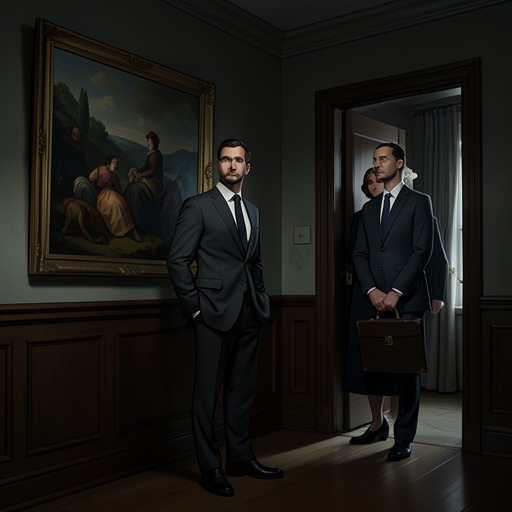
The day of the theft passes under the pressure of anticipation. Evan repeatedly reviews the plan and mentally reconstructs the gallery, attending to practical particulars: the painting’s height on the wall, the depth of a trash can, and the guards’ shoes striking polished granite. He buys a small red canvas backpack for twenty dollars, just large enough to hold the contents of the blue bag Coogan gave him. From an open-air café across the street, he watches vacationers pass between the two elephant statues near the gallery entrance at intervals marked by the clock above its doors.
At 5:30, Evan circles around to the alley behind the gallery. He wedges his guitar case into a three-foot pile of refuse beside the back door, covers it with garbage and newspaper, and leaves only its handle inconspicuous among the rubbish. The case is positioned for his escape; he returns to the street carrying the red backpack. The operation depends on ordinary things being overlooked: trash disguises the case, while the steady flow of visitors helps make the gallery feel public and unguarded.
Entering the Gallery
Evan crosses the foyer and passes the guard desk while both guards watch a small television beside a blank security monitor. He lingers behind them, studying their gray uniforms and pistols. Their presence initially frightens him, but the fear ebbs as he recognizes that they do not know he is there. His growing confidence becomes part of the danger: he savors the anonymity of standing among the guards and visitors while imagining that those around The Rendezvous will remember being present on the day it vanished.
He keeps the guards in view as he moves among the sculptures, then slips his backpack through the sprung metal lid of a trash can and checks that he can fit inside. After the remaining visitors leave, he enters the women’s bathroom and hears someone whistling in a stall. He waits through the interruption, then returns to his hiding place. The plan now rests on the guard instinctively choosing the men’s room when he makes his next round. Evan clenches his fists as the footsteps approach and regrets having left the gun in the trash with his supplies.
Inside the can, Evan endures the cramped wait as the guard passes. A rat has also entered through a hole at the bottom, eating scraps and defending the opening from other rats. Evan’s attention to the animal, and to the ache in his knees and back, stretches the interval between opportunity and action. When the guard moves on, Evan climbs out, slowly restores circulation to his legs, and tucks the gun into his waistband. He then skirts the gallery’s back wall. A ten-foot shaft of cold light from the foyer exposes him briefly, but the guards remain turned toward the television; Evan steps back into darkness and reaches the painting.
Removing the Painting
Evan lays out his tools on the floor: a razor knife, a thin wire noose, a small flashlight, a weight, a hammer, and the gun. He drapes the wire over the gilded frame, works it past the alarmed mount, and attaches the weight. Nothing at the guard desk stirs. Once the wire hangs free, he lifts The Rendezvous from its mount. The painting is light, and Evan thinks of it as worth two million dollars.
He lays the work face down and uses the flashlight and hammer to pry nails from the back of the frame. As he works, the flashlight catches a faded handwritten message on the reverse of the canvas; its contents are not disclosed. Evan removes the remaining nails, frees the canvas, and cuts around the metal staples with the razor knife. The aged fabric frays, and the yellow, unpainted border crackles as he rolls the liberated painting. His escape depends on separating the painted canvas from its frame, leaving the frame and tools behind on the gallery floor.
Alarm and Escape
A guard’s footsteps return before Evan can get clear. He drops flat as the guard’s flashlight searches the room, revealing the hammer, the empty frame, and the bare patch of wall. The alarm sounds, and strobes pulse across the gallery. Evan seizes the rolled painting and runs through the rear door, using the flashes to orient himself as he crosses the room. The guards do not pursue him outside.
The strobes leave floating white spots in Evan’s night vision. Limping, he retrieves the guitar case from the alley refuse and reaches an unlit wall near the cross street. He shifts the guitar strings aside and slips the rolled canvas through the instrument’s round sound hole, laying it against the inside edge so it cannot be seen. The alarm continues to wail over the city as he closes the case, steadies his shaking legs, and joins the crowd near the elephants. He limps to the line of taxis and signals the one at the front. The account ends as the driver asks whether he is American; it does not yet establish what happens to the painting afterward.
Significance of the Theft
The theft’s method makes concealment a chain of transformations. The case first disappears into refuse, Evan disappears into a trash can, and the painting itself is reduced from a framed gallery object to a rolled canvas hidden inside a guitar. Yet the escape is not clean: Evan leaves the frame and tools behind, and the knife visibly damages the canvas’s brittle edges. The carefully imagined plan succeeds in getting him out with The Rendezvous, but its success depends on exposing and altering the very object he set out to steal.